Researchers from the Faculty of Engineering at The University of Hong Kong (HKU) have made a significant discovery regarding quantum entanglement. This phenomenon, which has long been viewed as a significant obstacle in classical quantum simulations, actually enhances the speed of quantum simulations and acts as a valuable resource.
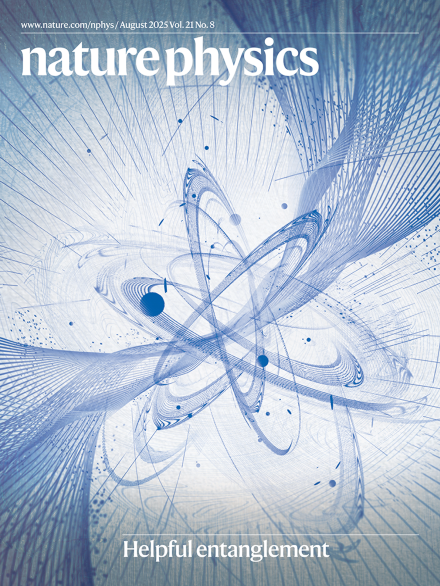
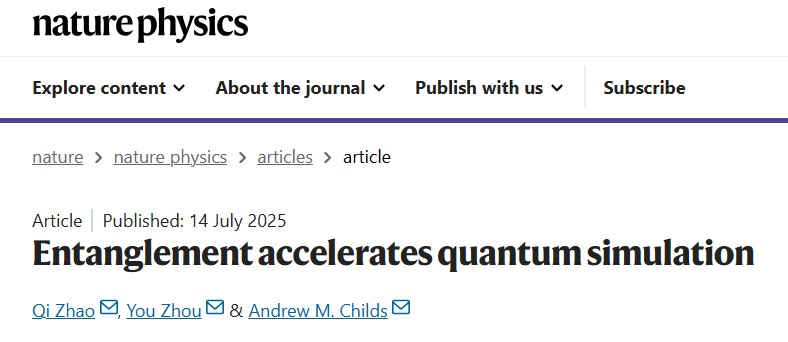
The groundbreaking findings have been featured as the Cover Story in the prestigious journal Nature Physics in an article titled “Entanglement accelerates quantum simulation”.
Simulating the dynamic evolution of matter is fundamental to understanding the universe, yet it remains one of the most challenging tasks in physics and chemistry. For decades, "entanglement"—the complex correlation between quantum particles—has been viewed as a formidable barrier. In classical computing, high entanglement makes simulations exponentially harder to perform, often acting as a bottleneck for studying complex quantum systems.
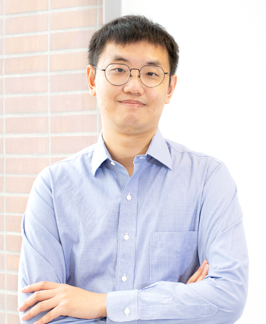
Led by Professor Qi Zhao from the School of Computing and Data Science at HKU, the research team collaborated with Professor You Zhou from Fudan University and Professor Andrew M. Childs from the University of Maryland, and overturned this long-held belief. They discovered that while entanglement hinders classical computers, it actually accelerates quantum simulations, turning a former obstacle into a powerful resource.
Classical simulation methods, such as Matrix Product States (MPS) and Matrix Product Operators (MPO), have matured significantly and are widely used in simulating quantum dynamics. However, they face a fundamental limitation: they cannot effectively solve systems with high entanglement, where the computational cost skyrockets. In contrast, while quantum simulators have long been championed as the future solution for simulating dynamic evolution, it was previously widely believed that their performance was independent of the system's entanglement.
This research proves otherwise. Professor Zhao’s team demonstrated that quantum simulation methods actually become more effective and efficient when entanglement is present. This counter-intuitive discovery suggests that the quantum advantage in solving these complex, highly entangled problems is even more significant than previously thought.
“Classical computers fear quantum entanglement, but we have proved that quantum computers actually ‘love’ it,” said Professor Qi Zhao. “High quantum entanglement means that quantum computers have a greater advantage over classical ones, making the realisation of ‘quantum advantage’ more attainable.”
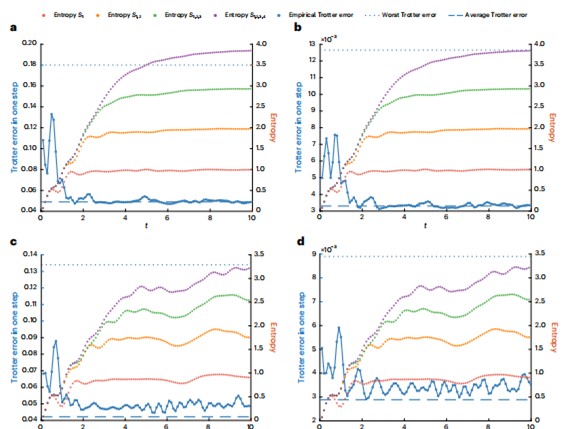
Based on this discovery, the team further developed an "adaptive simulation protocol." This method uses real-time measurements to estimate errors during a simulation, allowing the algorithm to automatically optimise its performance without significant additional costs.
This research represents a paradigm shift in how quantum resources are viewed. Entanglement is no longer just a signature of quantum mechanics or a theoretical resource; it is a practical tool that can be actively leveraged to design faster algorithms. The findings provide critical theoretical guidance for future high-efficiency quantum computing applications.
"Initially, we aimed to clarify the relationship between entanglement and quantum simulation performance, but we did not expect to derive such clean and beautiful physical formulas," Professor Zhao added. "Complex entanglement, once viewed as a computational barrier, turns out to be a key resource for enhancing simulation efficiency. This is the charm of basic research: through curiosity and exploration of fundamental principles, we can break the boundaries of existing knowledge and find entirely new paths for future technological breakthroughs."
Looking ahead, the research team plans to further explore the specific impact of entanglement acceleration in practical domains. Professor Zhao highlighted several promising directions, noting that this mechanism could significantly improve efficiency in simulating materials, high-energy physics, and chemical reactions. These advancements could pave the way for breakthroughs in developing better batteries, catalysts, and pharmaceuticals, where understanding complex quantum interactions is key.
Link to paper: https://doi.org/10.1038/s41567-025-02945-2
About Professor Qi Zhao
Professor Zhao obtained a Bachelor’s and Doctoral degree from Tsinghua University in 2014 and 2018 respectively. He was a postdoctoral researcher at the University of Science and Technology of China in 2019. He was a Hartree Postdoctoral Fellow at the University of Maryland in the United States before joining HKU as Assistant Professor in 2022. In 2024, he was recognized as one of the MIT Technology Review “Innovators Under 35” for the Asia Pacific Region.
For media enquiries, please contact:
Faculty of Engineering, HKU
Ms Christina Chung (Tel: 3910 3324; Email: chungmc@hku.hk)
Ms Natalie Yuen (Tel: 3917 1924; Email: natyuen@hku.hk)

 Facebook
  HKU IOS App
  HKU Android App
  Social Media and Apps