傳媒
新聞中心
新聞稿RSS訂閱
- 港大宣布成立亞洲首間斯通研究中心 應對社會經濟不平等挑戰2025年12月04日 - 新聞稿
- 諾獎泰斗托馬斯·薩金特教授蒞臨港大經管學院 解碼AI與經濟2025年12月01日 - 新聞稿
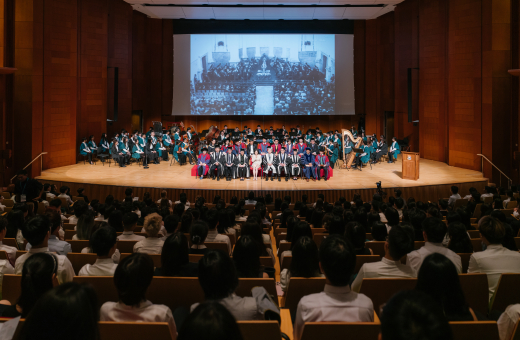
- 香港大學舉行第216屆學位頒授典禮 頒授名譽博士學位予三位傑出人士2025年11月26日 - 新聞稿
- 香港大學申作軍教授獲選為中國工程院外籍院士2025年11月26日 - 新聞稿
- 港大宣布成立亞洲首間斯通研究中心 應對社會經濟不平等挑戰2025年12月04日 - 新聞稿
- 諾獎泰斗托馬斯·薩金特教授蒞臨港大經管學院 解碼AI與經濟2025年12月01日 - 新聞稿
- 香港大學舉行第216屆學位頒授典禮 頒授名譽博士學位予三位傑出人士2025年11月26日 - 新聞稿
- 香港大學申作軍教授獲選為中國工程院外籍院士2025年11月26日 - 新聞稿
- 新界二戰盟軍與日軍槍堡的歷史建築評級作為本港教育與旅遊資產政策研究2025年11月14日 - 採訪邀請
- 諾貝爾獎得主Professor Ferenc Krausz首場講座「邁向可負擔的預防醫療:基礎科學應對重大挑戰」2025年11月05日 - 採訪邀請
- 香港天文與天體物理研究所 (HKIAA) 成立儀式2025年10月31日 - 採訪邀請
- 港大主辦數字教育政策公眾論壇2025年10月30日 - 採訪邀請
特寫故事
Drawing on her experience collecting data that was more revealing than expected, Professor Edith CH Ngai has been working on ways to decentralise data collection and machine learning.
A comprehensive international study undertaken by a team from HKUMed and including longitudinal studies on elderly people, found that internet use among adults over 50 years old is consistently associated with better mental health outcomes.
Fossil data has shown that over time deep-sea ecosystems have been affected by temperature changes and food input, raising questions about possible negative effects of intervention measures to mitigate against climate change.
The bright plumage of the parrot is one of its most distinctive features, and until recently how their unique red colouring was produced was a mystery. Using cutting-edge technology, biologists have now solved this centuries-old puzzle.
Developing 3D technology for archaeological digs improves the accuracy and efficiency of data gathering, and reduces the destructive element.
How do live broadcasts affect behaviour in the courtroom? What happens when judges use AI? And what can data analytics tell us about the factors that favour litigants in court? Professor John Liu has been investigating
Wearable technology that tracks a person’s vitals and health indicators is not unusual nowadays, but engineering researchers have taken the tech a big step further for more accurate and complex personal monitoring.
The data goldrush is putting pressure on personal privacy, as everyone from businesses to universities to governments seeks to mine and share data on individuals for profit, research or policy development. But those privacy concerns may be hindering non-intrusive solutions that could help advance research and benefit society, says computer scientist Professor Yiu Siu-ming.
Breaches of privacy in the digital age can open the door to cybercrimes. Dr Angus Young of the Faculty of Law considers the legal implications.
Letting consumers decide whether to share their data may not necessarily protect their privacy. It also gives mixed results to firms. Professor Xi Li has been investigating.
A remarkable new treatment for leukaemia, invented and developed at HKU, is chemo-free and has a 97 per cent success rate, offering new hope and less treatment trauma for patients.
People understandably have privacy fears about sharing their medical data, even when others could benefit. HKU scholars have looked at how these concerns can be allayed while still protecting privacy
Engineers have developed a drone capable of emulating bird flight – making it fast, safe and particularly suitable for situations where urgency is crucial.
Engineering researchers have implemented memristor-based neuromorphic decoders for brain-computer interfaces, creating a groundbreaking decoding system that can effectively co-evolve with changing brain signals.
Virologists have developed a nasal spray vaccine that is fast and effective against H5N1 in small animal models, and they are now set to start human trials.
Using resurrected 700-million-year-old genes, biomedical scientists have shown that molecular tools from ancient single-cell organisms older than animals themselves can transform animal cells into pluripotent stem cells, contributing to viable mice.
No, not yet. But that does not discount the possibility in future. Professor Simon Goldstein in the Department of Philosophy has been exploring the potential implications.
An innovative study takes a novel approach to measuring migration flows using online data, thereby providing a clear picture of a global population that is on the move.
HKU researchers in the field of landscape architecture and their international collaborators may have found a law that can describe the relationship between doses of nature in the city and mental health responses.
Astrophysicists make groundbreaking discoveries about the evolution of a binary star and its role in the origin of a retrograde planet orbiting in the opposite direction.
Professor Cora Lai Sau-wan of the School of Biomedical Sciences has deepened our understanding of where and how fear memories are stored in the brain – and shown how these memories could potentially be erased.
HKU scholars have been investigating the effects of loneliness and social isolation in different cultures and the possibility of having a universal framework to identify people at risk.
Evidence shows that urban density and planning can have direct effects on social isolation and loneliness. Therein could lie a solution, says urban scientist Professor Chinmoy Sarkar.
When Foreign Governments Meddle in Elections
Both the US and Russia have strong track records of meddling in foreign elections, including each other’s. In a year when billions of people are voting, Professor Dov Levin offers a timely overview of the methods and consequences of such interventions.
Four-legged robots have a problem. What happens when one of their legs breaks or stops operating? Research by Professor Lu Peng is providing a solution that is also taking these robots further along the path to being truly interactive.
Astrophysicists develop new proposals for studying the earliest stars in the universe, uncovering secrets of its origin and offering deeper insights into the incredible journey from the primordial cosmos to the world we live in today.
Using an innovative combination of the Sentinel-2 satellite mission and its dynamic time-series capabilities, along with phenological observations, biological scientists have made a promising advancement in mapping plant functional traits from space.
New findings highlight the critical role of invertebrates in breaking down forest litter and thereby helping sustain carbon and nutrient cycling.
Researchers from HKUMed have found that extending Hong Kong’s statutory paid maternity leave led to a significant improvement in maternal mental health. The findings have significant implications at a time when birth rates worldwide are falling and labour force shortages are a significant problem.
World-leading hepatitis researcher, Professor Yuen Man-fung, has made serious inroads towards a cure for some hepatitis B patients. He is also working to get more people tested so they can seek treatment for this silent but harmful virus.
Bioethicist Dr Zohar Lederman has been exploring the philosophical implications of the individual and social harm caused by loneliness, and practical solutions.
A Slippery Slope to Depression
Professor Tatia Mei-chun Lee and her colleagues have been investigating brain activity to see how loneliness can tip people into depression and what might be done to mitigate the effects.
HKU researchers have been investigating interventions to help alleviate loneliness among Hong Kong’s elderly.
‘Facial Recognition’ for Cells
Computer vision has an important role to play in medical diagnostics. Building on a decade of work in the field, Professor Kevin Tsia recently deployed an AI-driven, ultra-fast imaging tool to speed up cancer diagnosis and, in a separate project, applied AI to decode the development of zebrafish from images and other data.
Streets, sidewalks and roads which constitute more than a quarter of the built-up land in most cities, should be designed for people, but urban planning has typically not incorporated human perspectives. With the aid of urban big imagery data and AI, Professor Qiu Waishan is helping to correct this.
The technology behind embodied AI and autonomous cars has made huge strides in recent times, helped in part by a system devised by HKU Professor Li Hongyang and his collaborators.
Professor Andrew Luo’s work is deepening understanding about how the human brain processes and understands images, which has implications for the development of machine vision.
HKU’s Visual AI Lab is developing models to comprehend images from the real world and create new visual content in 2D, 3D and 4D in a more accurate, efficient, accessible and cheaper way than current commercial models.
The Challenges with Computer Vision
Allowing computers to identify, use and store visual images such as people’s faces, travel routes and medical scans, and to make decisions based on that, raises legal and ethical concerns. Professor Boris Babic explains.
其他服務
特寫故事
-
Drawing on her experience collecting data that was more revealing than expected, Professor Edith CH Ngai has been working on ways to decentralise data collection and machine learning.
-
A comprehensive international study undertaken by a team from HKUMed and including longitudinal studies on elderly people, found that internet use among adults over 50 years old is consistently associated with better mental health outcomes.
-
Fossil data has shown that over time deep-sea ecosystems have been affected by temperature changes and food input, raising questions about possible negative effects of intervention measures to mitigate against climate change.
-
The bright plumage of the parrot is one of its most distinctive features, and until recently how their unique red colouring was produced was a mystery. Using cutting-edge technology, biologists have now solved this centuries-old puzzle.
-
Developing 3D technology for archaeological digs improves the accuracy and efficiency of data gathering, and reduces the destructive element.
-
How do live broadcasts affect behaviour in the courtroom? What happens when judges use AI? And what can data analytics tell us about the factors that favour litigants in court? Professor John Liu has been investigating
-
Wearable technology that tracks a person’s vitals and health indicators is not unusual nowadays, but engineering researchers have taken the tech a big step further for more accurate and complex personal monitoring.
-
The data goldrush is putting pressure on personal privacy, as everyone from businesses to universities to governments seeks to mine and share data on individuals for profit, research or policy development. But those privacy concerns may be hindering non-intrusive solutions that could help advance research and benefit society, says computer scientist Professor Yiu Siu-ming.
-
Breaches of privacy in the digital age can open the door to cybercrimes. Dr Angus Young of the Faculty of Law considers the legal implications.
-
Letting consumers decide whether to share their data may not necessarily protect their privacy. It also gives mixed results to firms. Professor Xi Li has been investigating.
-
A remarkable new treatment for leukaemia, invented and developed at HKU, is chemo-free and has a 97 per cent success rate, offering new hope and less treatment trauma for patients.
-
People understandably have privacy fears about sharing their medical data, even when others could benefit. HKU scholars have looked at how these concerns can be allayed while still protecting privacy
-
Engineers have developed a drone capable of emulating bird flight – making it fast, safe and particularly suitable for situations where urgency is crucial.
-
Engineering researchers have implemented memristor-based neuromorphic decoders for brain-computer interfaces, creating a groundbreaking decoding system that can effectively co-evolve with changing brain signals.
-
Virologists have developed a nasal spray vaccine that is fast and effective against H5N1 in small animal models, and they are now set to start human trials.
-
Using resurrected 700-million-year-old genes, biomedical scientists have shown that molecular tools from ancient single-cell organisms older than animals themselves can transform animal cells into pluripotent stem cells, contributing to viable mice.
-
No, not yet. But that does not discount the possibility in future. Professor Simon Goldstein in the Department of Philosophy has been exploring the potential implications.
-
An innovative study takes a novel approach to measuring migration flows using online data, thereby providing a clear picture of a global population that is on the move.
-
HKU researchers in the field of landscape architecture and their international collaborators may have found a law that can describe the relationship between doses of nature in the city and mental health responses.
-
Astrophysicists make groundbreaking discoveries about the evolution of a binary star and its role in the origin of a retrograde planet orbiting in the opposite direction.
-
Professor Cora Lai Sau-wan of the School of Biomedical Sciences has deepened our understanding of where and how fear memories are stored in the brain – and shown how these memories could potentially be erased.
-
HKU scholars have been investigating the effects of loneliness and social isolation in different cultures and the possibility of having a universal framework to identify people at risk.
-
Evidence shows that urban density and planning can have direct effects on social isolation and loneliness. Therein could lie a solution, says urban scientist Professor Chinmoy Sarkar.
-
When Foreign Governments Meddle in Elections
Both the US and Russia have strong track records of meddling in foreign elections, including each other’s. In a year when billions of people are voting, Professor Dov Levin offers a timely overview of the methods and consequences of such interventions.
-
Four-legged robots have a problem. What happens when one of their legs breaks or stops operating? Research by Professor Lu Peng is providing a solution that is also taking these robots further along the path to being truly interactive.
-
Astrophysicists develop new proposals for studying the earliest stars in the universe, uncovering secrets of its origin and offering deeper insights into the incredible journey from the primordial cosmos to the world we live in today.
-
Using an innovative combination of the Sentinel-2 satellite mission and its dynamic time-series capabilities, along with phenological observations, biological scientists have made a promising advancement in mapping plant functional traits from space.
-
New findings highlight the critical role of invertebrates in breaking down forest litter and thereby helping sustain carbon and nutrient cycling.
-
Researchers from HKUMed have found that extending Hong Kong’s statutory paid maternity leave led to a significant improvement in maternal mental health. The findings have significant implications at a time when birth rates worldwide are falling and labour force shortages are a significant problem.
-
World-leading hepatitis researcher, Professor Yuen Man-fung, has made serious inroads towards a cure for some hepatitis B patients. He is also working to get more people tested so they can seek treatment for this silent but harmful virus.
-
Bioethicist Dr Zohar Lederman has been exploring the philosophical implications of the individual and social harm caused by loneliness, and practical solutions.
-
A Slippery Slope to Depression
Professor Tatia Mei-chun Lee and her colleagues have been investigating brain activity to see how loneliness can tip people into depression and what might be done to mitigate the effects.
-
HKU researchers have been investigating interventions to help alleviate loneliness among Hong Kong’s elderly.
-
‘Facial Recognition’ for Cells
Computer vision has an important role to play in medical diagnostics. Building on a decade of work in the field, Professor Kevin Tsia recently deployed an AI-driven, ultra-fast imaging tool to speed up cancer diagnosis and, in a separate project, applied AI to decode the development of zebrafish from images and other data.
-
Streets, sidewalks and roads which constitute more than a quarter of the built-up land in most cities, should be designed for people, but urban planning has typically not incorporated human perspectives. With the aid of urban big imagery data and AI, Professor Qiu Waishan is helping to correct this.
-
The technology behind embodied AI and autonomous cars has made huge strides in recent times, helped in part by a system devised by HKU Professor Li Hongyang and his collaborators.
-
Professor Andrew Luo’s work is deepening understanding about how the human brain processes and understands images, which has implications for the development of machine vision.
-
HKU’s Visual AI Lab is developing models to comprehend images from the real world and create new visual content in 2D, 3D and 4D in a more accurate, efficient, accessible and cheaper way than current commercial models.
-
The Challenges with Computer Vision
Allowing computers to identify, use and store visual images such as people’s faces, travel routes and medical scans, and to make decisions based on that, raises legal and ethical concerns. Professor Boris Babic explains.
Drawing on her experience collecting data that was more revealing than expected, Professor Edith CH Ngai has been working on ways to decentralise data collection and machine learning.
A comprehensive international study undertaken by a team from HKUMed and including longitudinal studies on elderly people, found that internet use among adults over 50 years old is consistently associated with better mental health outcomes.
Fossil data has shown that over time deep-sea ecosystems have been affected by temperature changes and food input, raising questions about possible negative effects of intervention measures to mitigate against climate change.
The bright plumage of the parrot is one of its most distinctive features, and until recently how their unique red colouring was produced was a mystery. Using cutting-edge technology, biologists have now solved this centuries-old puzzle.
Developing 3D technology for archaeological digs improves the accuracy and efficiency of data gathering, and reduces the destructive element.
How do live broadcasts affect behaviour in the courtroom? What happens when judges use AI? And what can data analytics tell us about the factors that favour litigants in court? Professor John Liu has been investigating
Wearable technology that tracks a person’s vitals and health indicators is not unusual nowadays, but engineering researchers have taken the tech a big step further for more accurate and complex personal monitoring.
The data goldrush is putting pressure on personal privacy, as everyone from businesses to universities to governments seeks to mine and share data on individuals for profit, research or policy development. But those privacy concerns may be hindering non-intrusive solutions that could help advance research and benefit society, says computer scientist Professor Yiu Siu-ming.
Breaches of privacy in the digital age can open the door to cybercrimes. Dr Angus Young of the Faculty of Law considers the legal implications.
Letting consumers decide whether to share their data may not necessarily protect their privacy. It also gives mixed results to firms. Professor Xi Li has been investigating.
A remarkable new treatment for leukaemia, invented and developed at HKU, is chemo-free and has a 97 per cent success rate, offering new hope and less treatment trauma for patients.
People understandably have privacy fears about sharing their medical data, even when others could benefit. HKU scholars have looked at how these concerns can be allayed while still protecting privacy
Engineers have developed a drone capable of emulating bird flight – making it fast, safe and particularly suitable for situations where urgency is crucial.
Engineering researchers have implemented memristor-based neuromorphic decoders for brain-computer interfaces, creating a groundbreaking decoding system that can effectively co-evolve with changing brain signals.
Virologists have developed a nasal spray vaccine that is fast and effective against H5N1 in small animal models, and they are now set to start human trials.
Using resurrected 700-million-year-old genes, biomedical scientists have shown that molecular tools from ancient single-cell organisms older than animals themselves can transform animal cells into pluripotent stem cells, contributing to viable mice.
No, not yet. But that does not discount the possibility in future. Professor Simon Goldstein in the Department of Philosophy has been exploring the potential implications.
An innovative study takes a novel approach to measuring migration flows using online data, thereby providing a clear picture of a global population that is on the move.
HKU researchers in the field of landscape architecture and their international collaborators may have found a law that can describe the relationship between doses of nature in the city and mental health responses.
Astrophysicists make groundbreaking discoveries about the evolution of a binary star and its role in the origin of a retrograde planet orbiting in the opposite direction.
Professor Cora Lai Sau-wan of the School of Biomedical Sciences has deepened our understanding of where and how fear memories are stored in the brain – and shown how these memories could potentially be erased.
HKU scholars have been investigating the effects of loneliness and social isolation in different cultures and the possibility of having a universal framework to identify people at risk.
Evidence shows that urban density and planning can have direct effects on social isolation and loneliness. Therein could lie a solution, says urban scientist Professor Chinmoy Sarkar.
When Foreign Governments Meddle in Elections
Both the US and Russia have strong track records of meddling in foreign elections, including each other’s. In a year when billions of people are voting, Professor Dov Levin offers a timely overview of the methods and consequences of such interventions.
Four-legged robots have a problem. What happens when one of their legs breaks or stops operating? Research by Professor Lu Peng is providing a solution that is also taking these robots further along the path to being truly interactive.
Astrophysicists develop new proposals for studying the earliest stars in the universe, uncovering secrets of its origin and offering deeper insights into the incredible journey from the primordial cosmos to the world we live in today.
Using an innovative combination of the Sentinel-2 satellite mission and its dynamic time-series capabilities, along with phenological observations, biological scientists have made a promising advancement in mapping plant functional traits from space.
New findings highlight the critical role of invertebrates in breaking down forest litter and thereby helping sustain carbon and nutrient cycling.
Researchers from HKUMed have found that extending Hong Kong’s statutory paid maternity leave led to a significant improvement in maternal mental health. The findings have significant implications at a time when birth rates worldwide are falling and labour force shortages are a significant problem.
World-leading hepatitis researcher, Professor Yuen Man-fung, has made serious inroads towards a cure for some hepatitis B patients. He is also working to get more people tested so they can seek treatment for this silent but harmful virus.
Bioethicist Dr Zohar Lederman has been exploring the philosophical implications of the individual and social harm caused by loneliness, and practical solutions.
A Slippery Slope to Depression
Professor Tatia Mei-chun Lee and her colleagues have been investigating brain activity to see how loneliness can tip people into depression and what might be done to mitigate the effects.
HKU researchers have been investigating interventions to help alleviate loneliness among Hong Kong’s elderly.
‘Facial Recognition’ for Cells
Computer vision has an important role to play in medical diagnostics. Building on a decade of work in the field, Professor Kevin Tsia recently deployed an AI-driven, ultra-fast imaging tool to speed up cancer diagnosis and, in a separate project, applied AI to decode the development of zebrafish from images and other data.
Streets, sidewalks and roads which constitute more than a quarter of the built-up land in most cities, should be designed for people, but urban planning has typically not incorporated human perspectives. With the aid of urban big imagery data and AI, Professor Qiu Waishan is helping to correct this.
The technology behind embodied AI and autonomous cars has made huge strides in recent times, helped in part by a system devised by HKU Professor Li Hongyang and his collaborators.
Professor Andrew Luo’s work is deepening understanding about how the human brain processes and understands images, which has implications for the development of machine vision.
HKU’s Visual AI Lab is developing models to comprehend images from the real world and create new visual content in 2D, 3D and 4D in a more accurate, efficient, accessible and cheaper way than current commercial models.
The Challenges with Computer Vision
Allowing computers to identify, use and store visual images such as people’s faces, travel routes and medical scans, and to make decisions based on that, raises legal and ethical concerns. Professor Boris Babic explains.
聯絡我們
- 吳婷
高級經理(傳媒關係)
電話:(852) 3910 3612
電郵: ngjaymee@hku.hk - 蔡建豪
經理(傳媒關係)
電話:(852) 3917 2607
電郵: khkchoi@hku.hk
如辦公時間以外有傳媒查詢,請發送whatsapp至(852) 6347 2221